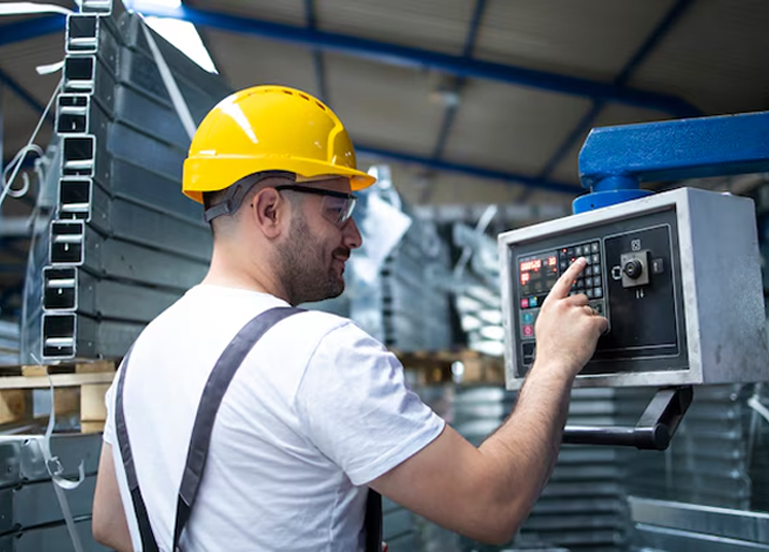
Automation and Integration
Automation and integration solutions are engineered to unify processes, protect equipment, and optimize manufacturing efficiency. By connecting monitoring systems, robotics, and production cells, manufacturers achieve consistent performance, reduced downtime, and scalable operations that support quality improvement and long-term growth across evolving production demands.
Tool Protection
Tool protection is essential in automated manufacturing environments to prevent damage to presses, dies, and tooling assets. Advanced systems continuously monitor press motion, alignment, and load conditions during operation. They detect misfeeds, double hits, and incorrect part positioning before damage occurs. This proactive detection significantly reduces unplanned downtime and costly repairs. Integrating tool protection improves reliability, extends tool life, enhances product quality, and creates a safer, more stable production environment for lasting operational success, while supporting output and minimizing sudden failures across demanding production cycles.
Tonnage Monitoring
Tonnage monitoring systems ensure presses operate within safe load limits while protecting equipment and maintaining part quality throughout production. These systems measure force distribution across the press to identify overloads and off-center conditions early. Real-time monitoring helps detect mechanical issues before they escalate into failures. Operators gain actionable insights that support timely adjustments during active production cycles. Integrating tonnage monitoring improves uptime, reduces maintenance costs, protects capital investment, and strengthens production control across manufacturing operations and equipment reliability for teams in use.
Robotic Cells
Robotic cells automate repetitive, high-precision tasks to improve efficiency and workplace safety. These systems are designed for material handling, assembly, welding, packaging, and machine tending applications within modern facilities. Each robotic cell integrates seamlessly with existing equipment and safety systems to ensure stable operation. Automation reduces labor strain while increasing throughput and consistency throughout production cycles. Custom-engineered robotic cells ensure optimized workflows, smooth implementation, and reliable performance aligned with specific production requirements and defined operational goals.
Cells
Manufacturing cells combine machines, robots, conveyors, and safety systems into one unified production unit built for efficiency. These integrated environments streamline workflows, improve coordination, and reduce material handling across operations. Cells support high-volume output while managing complex automated processes with precision. Improved organization delivers faster cycle times, fewer operational errors, and consistent output quality. Implementing manufacturing cells creates a flexible, scalable structure that adapts efficiently to changing demand while maintaining reliable performance standards in modern manufacturing environments worldwide.